See prices From 75 EUR · Free cancellation available
Contents
The Shibuya Sky observation deck is an open-air rooftop viewpoint at the top of Shibuya Scramble Square in Tokyo, about 229 meters above the ground. You buy a timed entry ticket, ride up, and stand above one of the busiest crossings on Earth with a 360 degree view. Here is what I’d actually do: pick the light you want first, then book that slot, because the time of day changes the trip more than anything else. This guide is the hub for every practical question, from hours and height to photos, food and the Mt. Fuji view. It links down to a dedicated page for each one, so you can read only what you need. If you want the whole Shibuya Sky story with tickets and tours in one place, start on the Shibuya Sky homepage, then come back here to plan the visit.
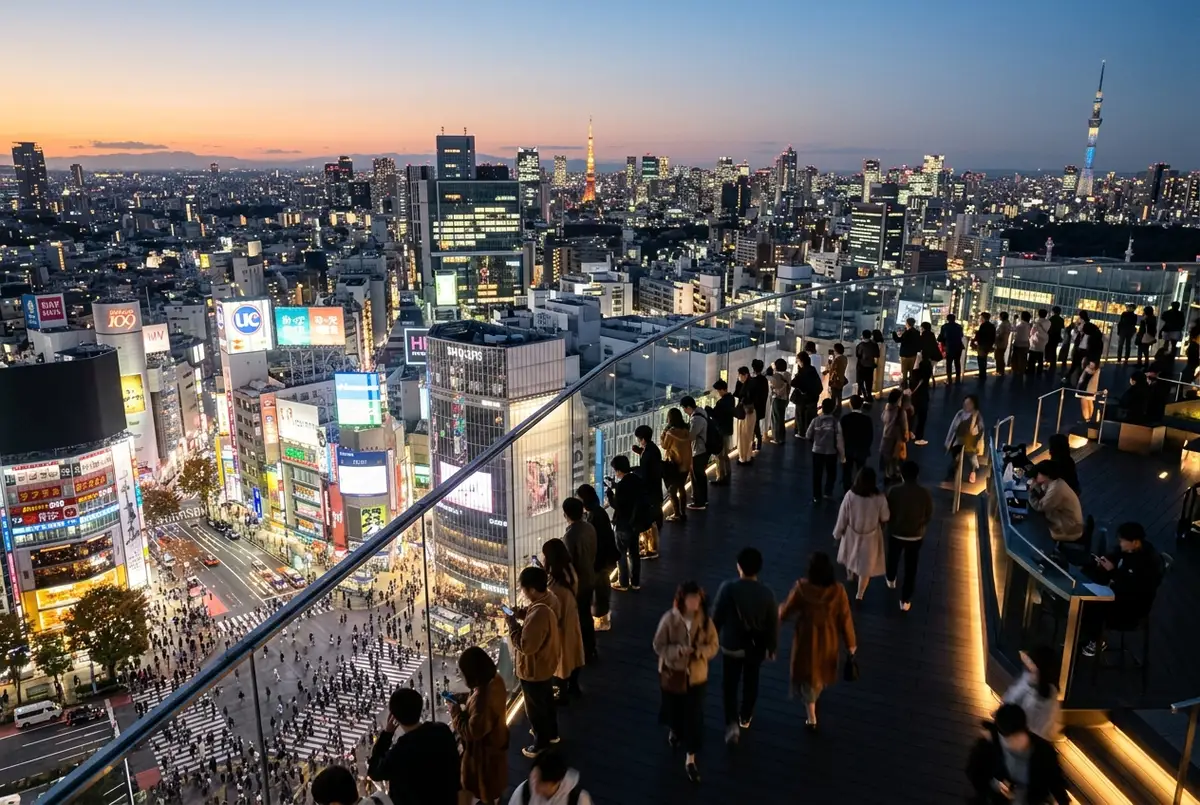
It is a rooftop observatory built into the top of a large tower next to Shibuya Station, and its main draw is that the upper level is open-air. There is no glass between you and the city on that level, so you feel the wind and see the crossing below without reflections. The official page, at Shibuya Scramble Square Sky, is the place to confirm current rules.
The Shibuya Sky observatory is part of the Shibuya Scramble Square complex, which mixes shops, offices and restaurants. That matters for planning, because you enter through the building and take lifts and escalators up before you reach the roof. I’d allow time for that journey, since it is part of the visit.
My honest read on why it works: most Tokyo viewpoints show you a wall of towers. This one shows you a famous street scene in motion, with the crossing, the station and the surrounding districts laid out below. If that scene is why you came to Tokyo, I’d say it is one of the best uses of an hour you can find.
Check prices & dates
Ready to visit?
Book your tickets in advance: popular time slots sell out.
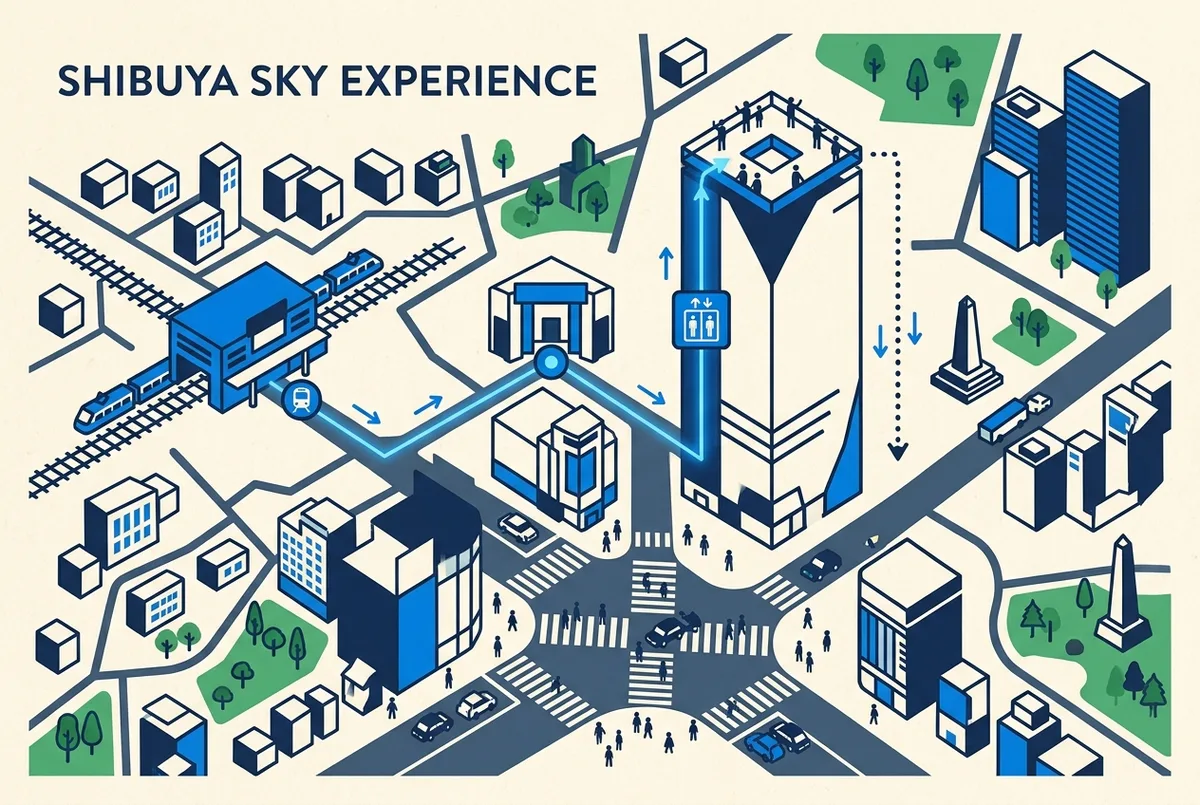
A visit follows a simple pattern: buy a timed ticket, arrive within your window, go through the building to the entrance, ride up, spend time on the levels, and go back down. Most of the wait is on the way in, not on the roof.
Here is the flow I’d expect, based on how timed decks normally run:
Book a slot. Pick a date and time band online, as covered in our booking guide.
Arrive early. Get to the building before your window so entry is smooth.
Ride up. The journey is part of the show, with lifts and a lit up escalator stretch.
Explore the levels. Take your time on the roof, the indoor gallery and the photo spots.
Head down. Plan a meal or a walk nearby, since the area is full of options.
For a step by step view of what each stage feels like, read what to expect at Shibuya Sky. I’d read that page before a first visit, because it removes the small surprises that slow people down.
What Are the Opening Hours?
Hours change by season and date, and last entry is earlier than closing time. That is why I do not print hours here. The Shibuya Sky hours guide explains how the schedule works and what to check on the day.
The rule I’d follow: never plan around the last slot of the evening. It is the tightest, the most likely to sell out and the easiest to miss. If your ideal window is late, I’d book it early and add a buffer for trains and the walk to the entrance.
When Is the Best Time to Visit?
The best time depends on what you want to see. Daytime gives long visibility and the best chance of Mt. Fuji on a clear day. Sunset gives golden light and a smooth change from day to night. Night gives the glowing city. The best time to visit guide breaks this down by season and time of day.
My pick: sunset, if you can get it. It is the hardest slot and the most rewarding, because you see the city in three moods in one visit. If you cannot get it, I’d take a night slot over a midday one, since the lights make the crossing far more dramatic. Midday is my last choice unless the forecast promises a very clear sky and you want a Fuji look.
Sunset time changes through the year, so a fixed slot can miss the light in some months. Use the sunset time by month guide to line up your booking with the season you are visiting.
What Is Shibuya Sky Like at Night?
At night the deck becomes a sea of lights, with the crossing pulsing below and the towers of Shinjuku and Tokyo glowing on the horizon. It is a different experience from the day, with more atmosphere and more people. The Shibuya Sky at night guide covers what to expect and how to pick a slot.
My take: night is the safe choice for first-timers, since the view looks good in almost any weather that leaves the deck open. Day views depend on clear air. Night views forgive haze. If your trip is short and you cannot afford a disappointing sky, I’d go at night.
Bring a light layer, since the open-air level is breezy even on a mild evening. I’d also keep a phone strap or wrist loop handy, because wind and a phone in one hand are a poor mix.
How High Is the Deck?
The upper level is about 229 meters above the ground, according to our tour data, and the height is a big part of the draw. It puts you above nearly everything around the station, so the crossing looks like a model. The Shibuya Sky height guide explains how it compares with other Tokyo viewpoints.
I would not choose a deck on height alone. Higher is not always better, because distance can flatten the scene. What makes this one work is the position: it sits right above the crossing, so you see street level activity clearly. That matters more to me than a few extra meters.
How Do You Get to Shibuya Sky?
The deck is next to Shibuya Station, so you can reach it by train from most parts of Tokyo, then walk into the building. The station is large and confusing, so a first visit takes longer than you expect. The how to get to Shibuya Sky guide lays out the route and the landmarks to follow.
I’d add fifteen to twenty minutes of buffer for a first visit, and more if it is rush hour. Shibuya Station has many exits and several levels, and wandering the wrong way costs time you do not have with a timed ticket. Use the building signs, not just your map app.
Is It Worth the Money?
For most first-time visitors, I think yes, if you care about views and the crossing. It is a paid, timed attraction, so it is not the cheapest way to see Tokyo, but it gives you a specific experience that a free deck does not. The is Shibuya Sky worth it guide weighs the pros and cons honestly.
Here is my line: if you have one free evening and want a single big view, book it. If you are on a tight budget or have no interest in city views, skip it and spend the money on something else. It does not suit everyone, and I would rather say so than push a ticket on you.
Prices are set by the operator and can change. On this site, guided options with deck admission run from EUR 63 per person, checked on 2026-09-21, and prices may vary by date and group size. For a full breakdown, see the ticket price guide.
Can You Visit With Kids?
Yes, many families do, but plan for wind, crowds and the timed entry. Check the age bands, stroller rules and access information before you go. The Shibuya Sky with kids guide covers family planning and accessibility in detail.
My advice for parents: choose an earlier slot, since small children tire fast, and keep bags light. A sunset slot is lovely but crowded. I’d take a late afternoon window with kids, so they see daylight and the first lights without a late night.
What Are the Best Photo Spots?
The best photos come from the open-air level, with the crossing in the frame. Angles, glass, wind and reflections all matter. The Shibuya Sky photos guide explains what gear and rules apply and where the good spots tend to be.
I’d take my best shots early in the visit, before the crowd builds and before your battery drops. Keep the lens clean, since the wind carries dust, and shoot through gaps where you can. If you plan a tripod or a longer setup, check the rules first, because rules can change.
Is There Food or a Bar on the Roof?
There are food and drink options connected to the deck, and some may need a reservation. What is on offer changes over time, so check the current list. The rooftop bar and food guide explains how bookings work and how to fit a meal around your slot.
My pick: eat somewhere in the building after your visit, not before. Going up hungry is a mistake, but going up full and sleepy is worse. A drink on the roof can be a nice finish, and I’d book it in advance for a peak evening.
Can You See Mt. Fuji?
On a clear day, sometimes. Visibility depends on air quality and season, and it is never guaranteed. The Mt. Fuji view guide explains when the odds are best and how to set expectations.
My honest read: do not book only for Fuji. Treat it as a bonus. Winter and early morning tend to have the clearest air across Tokyo, but I would still treat any sighting as luck. The crossing and the skyline are what you can count on.
What Are the Rules on Bags and Lockers?
Rules cover what you can carry, what you must store and what is banned on the open-air level. They can change, so read them on the day. The lockers and rules guide explains how to pack and what to leave behind.
I’d travel light. A small bag, a phone and a layer are enough. Big bags slow you down and may need to be stored. The fewer things you carry, the more you enjoy the roof.
What About Christmas and New Year?
Holiday periods are busier and may bring different hours or special rules. If you plan to visit around them, book early and check the calendar. The Christmas and New Year guide explains how the season changes the visit.
I’d never leave a holiday slot to chance. Crowds are heavier, slots go faster and plans are harder to change. If your dates are fixed, lock in your ticket now.
How Do You Book and What Should You Check?
Book a timed slot online, read the cancellation terms and keep a backup window. The Shibuya Sky tickets guide is the hub for every ticket question: prices, slots, where to buy, refunds and same day entry.
Here is my short list of what to check before you pay:
Your slot. Pick the light you want, then book it.
The terms. Check cancellation and weather rules.
The age bands. Check who needs a ticket and at what price.
The route. Compare the official page and a platform if you like.
If you want a bundled plan, the Shibuya Sky morning tour with ticket is a two hour guided option from EUR 75, and prices may vary. It gives you deck admission, a route and a guide in one booking.
What Should You Wear and Bring?
Dress for wind, not for the forecast on the street. The open-air level is exposed, so even a mild evening can feel cool at 229 meters, and a light jacket is the one item I’d never leave behind. Wear shoes you can stand in for a while, since you will spend most of the visit on your feet.
Here is my short packing list:
A light layer. The roof is breezy in every season.
A charged phone. You will use it for photos and for your e-ticket.
A phone strap or wrist loop. Wind and a loose phone are a bad pair.
A small bag. Anything large may have to be stored, so keep it minimal.
Your booking confirmation. Save it offline in case the signal is slow inside the tower.
I’d skip anything you would be upset to drop over the edge, including loose hats and dangling accessories. That sounds fussy, but the wind is stronger than people expect. If you travel light and dress in layers, you will enjoy the deck far more than someone juggling a big bag and a thin shirt.
What Else Should You See Nearby?
The crossing itself is the obvious partner to the deck. The Shibuya Crossing view guide explains how to see it from above and from street level, and where the best vantage points are. Together with the deck, it makes a full Shibuya evening.
I’d walk the crossing before or after the visit, not during. It gives you a feel for the scale you are about to see from above. If you want to compare the deck with another Tokyo viewpoint, the Shibuya Sky versus Tokyo Skytree guide is the place to start.
Frequently Asked Questions
Is Shibuya Sky open air?
The upper level is open-air, so you feel the wind and see the view without glass. Some areas are indoors. Weather can affect access, so check the official page and your booking terms on the day.
Do I need to book Shibuya Sky in advance?
I’d say yes for anything that matters. Entry is timed, and popular windows like sunset sell first. You may find same day tickets at the venue, but it is a gamble. Read the walk in guide before you rely on it.
How long should I plan for a visit?
Plan for a good part of an evening or an hour or two in the daytime, including the journey up and the time to get in. I’d add buffer for the station and any queue. Hours and entry rules can change, so check the official page.
What is the best time of day?
Sunset is my pick, then night. Midday is my last choice unless the sky is very clear. Your goal decides it, so pick the light first and then the slot.
Can I visit Shibuya Sky in bad weather?
Often yes, but the view can suffer, and access to the open-air level may change. Read the weather terms on your booking. If you want a clause for closures, see the cancellation and refund guide.
My Recommendation
Book the deck if you want a big view of Tokyo and the crossing, and pick your light before you pick your date. I’d choose sunset, then night, and I would not rely on Mt. Fuji. Keep your bag light, arrive early and read the terms on your ticket. Then use the guides above for hours, height, food, photos and rules, and go with a plan instead of a guess.