See prices From 80 EUR · Free cancellation available
Contents
Shibuya Sky photos come out best when you plan three things: where you stand, what time you go and how you hold the camera. The deck is open air, so you avoid the glass glare that ruins photos at most city towers, but wind, crowds and rules on gear can get in the way. Here is my rule: decide your two or three favorite shots before you step outside, and take those first. This guide covers photo spots, phone settings, glare, sunset and night timing, and the gear limits you should confirm with the operator. For the overview of the deck, see the Shibuya Sky observation deck guide, and for booking a slot go to Shibuya Sky tickets.
Where Are the Best Shibuya Sky Photo Spots?
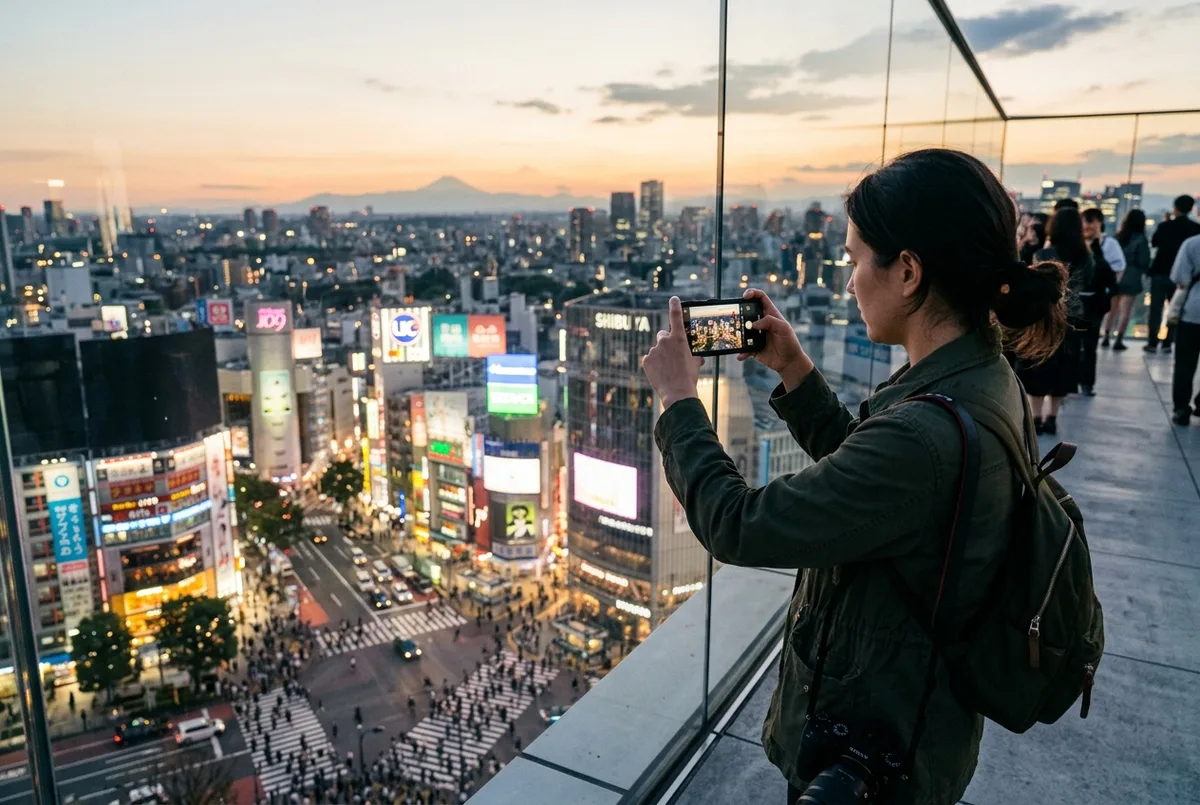
The best spots are the open-air edges facing the Scramble Crossing, the corner with glass panels that visitors favor for pictures and the side that faces the western skyline. Each gives a different backdrop.
I’d pick the crossing side first, because it is the image that says Shibuya. The corner is popular, so expect a wait at busy times, and I would not stand there for long, since other visitors are waiting. The shibuya sky photo spots you choose should depend on the light: at sunset the west side glows, and after dark the crossing pulses with color. Walk the full circle once before you commit. Floor layouts and named photo spots can change, so use the operator’s map for the current setup, and see what to expect at Shibuya Sky for the general flow.
Check prices & dates
Ready to visit?
Book your tickets in advance: popular time slots sell out.
Stay on the open-air stage, where there is no glass between you and the skyline. If you shoot through glass on the indoor level, press your lens or your hand close to the pane and use a dark jacket to block reflections.
That is the first advantage of this deck, and I would use it. Outdoors, glare is not the main problem. Lens smudges and wind are. Carry a small lens cloth and wipe your phone before each shot. If you must shoot indoors, stand at an angle to the light source and keep your phone flush against the glass. Safety panels at the edge can also create a reflection, so shoot over or between them where the design allows.
What Phone Settings Work Best at Shibuya Sky?
Use the main lens, turn on night mode after dark, lock focus and exposure by tapping the screen and hold the phone with both hands. Avoid digital zoom, and shoot a short burst so you get one sharp frame.
These settings are the basics I’d use for the shibuya sky photography situations most visitors face:
Daytime: the standard lens, and tap on the skyline to set exposure.
Sunset: lower the exposure slightly so the sky keeps its color.
Night: night mode, both hands and a still breath.
Crossing shots: take a burst, since the crowd moves in waves.
I’d also turn off the flash, because it only lights the glass and the wind. Every phone is different, so test the settings while you wait in line.
What Is the Best Time for Shibuya Sky Photos?
Sunset and the 30 minutes after it give the best light, because you get warm sky, a soft skyline and city lights in one visit. Night is dramatic, and morning gives clear air and a chance of a distant Mt. Fuji.
My pick is sunset, with an arrival buffer, because the light changes every few minutes. I’d take a few daylight shots first, then the sunset, then the lights. If you want exact timing for your travel month, our page on Shibuya Sky sunset time by month has a planning table with approximate times, and I’d check the sunset time for your exact date. For the nighttime side, read Shibuya Sky at night.
Can You Bring a Tripod to Shibuya Sky?
Tripods, selfie sticks and large gear are usually restricted on a busy open-air deck. Rules are set by the operator and can change, so I cannot promise anything for your date.
The shibuya sky tripod question is a common one, and my honest answer is to plan without a tripod. Bring a small, steady grip instead, such as a wrist strap or a mini grip for your phone, and rest your elbows on a ledge if the design allows. If you own a heavy camera setup, contact the operator before you go, because a refusal at the entrance wastes a slot. The Shibuya Sky lockers, bags and rules page covers bag and gear policy in more detail.
Is There an Official Photo Service and What Does It Cost?
Some observation decks offer a staff photo service at a set spot, sold separately from entry. I cannot confirm what the current service is or what the shibuya sky photo price would be, so check the official page for any photo option.
I would treat a paid photo as a bonus and not a plan. Your own phone can do a good job if you follow the tips here. If you like the idea of a keepsake, ask about it at check-in and compare the price with what you would spend on a printed photo at home. The tour listings we reviewed mention a digital photo taken by a guide on the night tour, but that is a tour feature, and not an official deck service.
How Do You Photograph Mt. Fuji From the Deck?
Mt. Fuji only shows on clear days, mostly in cooler months and in the morning or late afternoon. If it appears, use the zoom lens on your phone, hold steady and take several frames.
I’d never plan a slot around Fuji alone. It is a bonus, and the skyline and crossing are the reliable subjects. To improve your odds, choose a flexible date and check the forecast the day before. Our page on the Shibuya Sky Mt Fuji view covers seasons and realistic odds. Haze and cloud can hide the mountain even on a nice day.
How Do You Photograph the Scramble Crossing From Above?
Look straight down from the crossing side and wait for the lights to change. When the signals turn, the crowd surges in every direction, and that is your moment. Use a burst to catch the pattern.
The view from 229 meters is what most people come for. From that height, the crossing looks like a moving mosaic, and I’d keep the frame tight enough to read it. At night, the lights add streaks and glow. If you are curious about the street-level side, see our page on Shibuya crossing views for the other vantage points. Height facts are in the page on Shibuya Sky height.
What Should You Wear and Carry for Photos?
Wear a light jacket, since the deck is windy, and carry a small bag. Bring a lens cloth, a wrist strap and a charged phone. Leave large bags behind, because bag rules apply.
Here is my kit list:
A phone with a wrist strap, for safety and a steady grip.
A lens cloth, for smudges.
A small power bank, since night mode and video drain the battery.
A dark, plain top, to reduce reflections indoors.
Nothing large or loose, because anything dropped is a danger below.
How Do You Get Photos Without the Crowd?
Choose a weekday, arrive at the start of your window and go to the open-air stage first. The crowd builds as sunset approaches, and the popular edge spots fill up.
I’d rather trade a little light for a clearer view. A slot 20 minutes before sunset often gives you space to shoot, and the sky is still good when the crowd peaks. Do not hog a spot, because other visitors are waiting for the same view. Be polite, take your shots and move on, and you will find people are generous in return.
Should You Book a Guided Photo Slot?
A guide can help with angles and timing, and many visitors like the extra support. It also means a fixed schedule, and time on the deck may be limited.
The Shibuya Sky sunset or night walking tour combines a one-hour street walk with the deck, from EUR 80 per person as of 2026-09-21, and prices may vary by date. The listing says you can stay on the deck after the guide leaves, which is useful for photographers who want more time. It is the option I’d pick if you want sunset or night shots plus street-level context. For a plain, unhurried session, a standard timed ticket is enough.
My Recommendation
Book a sunset or just after slot, arrive early, walk the deck once and take your two or three key shots first. Hold your phone with both hands, skip the tripod and keep a lens cloth handy. If you want guidance and extra time, the walking tour above is my pick. Always confirm the current rules on cameras, tripods and bags on the official Shibuya Scramble Square Sky page before you go.
Shibuya Sky Photos FAQ
Can you take photos at Shibuya Sky?
Yes. Photography is a main reason to visit, but check the operator’s rules on gear.
Are tripods allowed at Shibuya Sky?
They are usually restricted. Check the official page for your date, and plan to shoot handheld.
What is the best time for Shibuya Sky photos?
Sunset and the 30 minutes after it, when you get warm light and city lights together.
Is there glare at Shibuya Sky?
Not on the open-air stage. Indoors, press your phone to the glass and block reflections.
Is there a paid photo service?
Confirm on the official page, because I cannot verify the current service or price.